Anna’s Story
 The doctors at the hospital (Children’s Hospital of Wisconsin) thought that it may have been a clot that caused her stroke (one of the chemo drugs she was on can cause clots). Shortly after Anna was admitted though, Anna developed a high fever of 103F and it persisted for over two weeks. The doctors at the hospital ran a multitude of tests, but could not determine the cause. In desperation, I iced her head 24 hours a day in an attempt to keep her comfortable. Finally, her doctor ordered a CT scan and found that many large abscesses (puss sacs) had formed in her brain. I will never forget the doctor telling us “it’s not a death sentence, but…”.
 Anna’s oncologist was feverishly searching for approaches that could save her life. Although most of the large abscess was removed, there were still several other abscesses in Anna’s right hemisphere. His initial recommendation was a complete removal of the right side of her brain, as he was concerned that the fungus could spread and kill Anna. His top priority, as was mine, was to keep Anna alive. The hemispherectomy is the generally accepted medical response for this type of infection. Since a month had already gone by and Anna still could not use her left leg or arm and lost sight in the left half of each eye, the consensus was that there would be no increase in physical deficits. This discussion just made my wife and I sick to our stomachs – we were totally devastated wondering what would be left of Anna and her personality after this.
 Dr. Walsh told Anna’s oncologist that his research had shown that Aspergillis in the brain could be successfully treated with medical therapy (“drugs” in layman’s terms) in conjunction with targeted surgical therapy. The larger abscesses still needed to be surgically removed, but the smaller ones could be treated with IV anti-fungal medications. The medicine would keep the abscesses in check and help them get smaller over time. This was incredible news for our family! Anna had a chance to live and keep the right side of her brain. We had hope!!!
 After the surgery and the new medicine, the miracles started to happen. About a week after the large abscess was drained, Anna started to have trace movement in her upper left leg. Each day, she started having a bit more. Because we were able to preserve the right side of her brain, Anna was able to regain voluntary movement of her paralyzed leg.
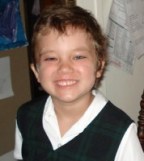 It was a bit crazy from April to June as Anna required several targeted brain surgeries to drain abscesses and clear blockages caused by them (see the big bump on her head in the picture to the left). In the last brain surgery, the neurosurgeon carefully removed a puss-filled sac about the size of an egg that had reformed in that area. The surgery was successful and the sac was sent for analysis. Aspergillus was found in the core of the sac, but none was found to be alive. The original surgery back in March didn’t get it all, but Dr. Walsh’s antifungal therapy was successful in helping Anna kill off the remaining Aspergillus.
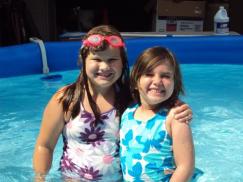 Now for some wonderful news! By her 7th birthday (3 months after the stroke), Anna walked on her own at her birthday party attended by all of her 1st grade classmates. Anna continues to improve and her left leg continues to get stronger every day. Her left arm is also getting stronger and she can use it from the elbow up. She is more energetic than ever and is starting to reengage in her favorite hobby again – drawing. She plays dolls with her sister and swings on our swing set in the backyard. All of this would not have been possible if we couldn’t stop the Aspergillus from spreading or if we went through with the hemispherectomy.
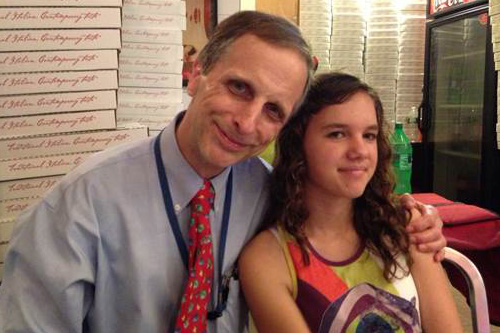 It is because of his laboratory investigations and clinical research that Anna is on the road to recovery. Dr. Walsh’s research discoveries have saved Anna’s life. My wife and I are grateful beyond words for all the work he has done. Thank you Dr. Walsh for your dedication and passion. I sincerely hope that Dr. Walsh and his associates continue to discover and develop new medical advances that will ultimately help others to live longer or to survive a devastating infection.
 Mission From The Heart